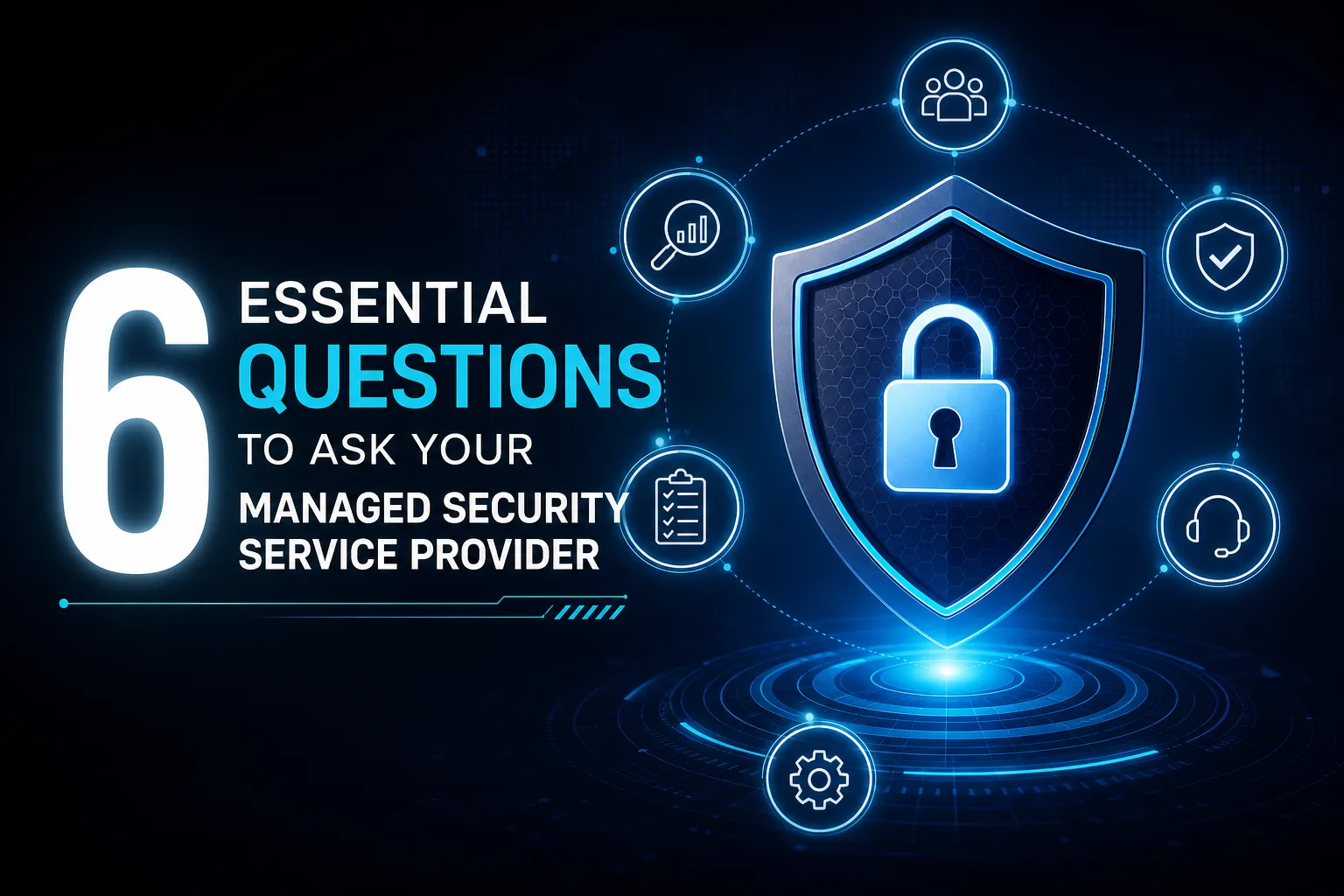
6 Essential Questions to Ask Your Managed Security Service Provider
Learn the key questions to ask managed security service provider candidates to uncover strengths, avoid costly gaps, and choose the right MSSP for your business.
Picture this: it’s 2 a.m., your team wakes up to a breach, and you’re waiting for your managed security partner to act fast. But when their reply comes, it’s clear they don’t know your systems—or worse, they’re still figuring out who’s supposed to handle what. This isn’t some outlier; it happens more than most companies realize. The real gap between a proactive MSSP and a vendor who just checks boxes usually shows up in the questions you ask before you ever sign a contract. The right questions don’t just weed out weak providers—they show you who’s actually ready to protect your business and respond when it matters most.
What certifications does your staff hold, and are they up to date?
Plenty of companies assume a security firm’s team is always current on training, but that’s rarely true. Cybersecurity certifications aren’t just trophies—they’re only valuable if they’re kept current. Go deeper than the acronyms. Ask which employees have which credentials, how often they’re renewed, and if there’s a process for tracking new standards. It’s not enough for an MSSP to say “our analysts are certified.” You want details: “How many engineers keep active credentials in areas like cloud security or digital forensics? Is there an annual recertification or do you require continuous new training?”
This matters because stale knowledge leaves you exposed. A provider might have a wall full of certificates from years ago, but if their team hasn’t seen today’s threats up close, your defenses will lag.
Don’t hesitate to ask for documentation or even do spot checks. If an MSSP dodges or gives fuzzy answers, their staff might not be as sharp as the sales pitch. The best providers expect this scrutiny—they know it’s just as much in your interest as theirs.
How do you secure both on-premises and cloud environments?
Security challenges often show up where legacy and modern systems intersect. That’s why you need to ask, in detail, how your MSSP protects both your on-premises systems and your cloud assets. Don’t settle for “Yes, we cover both.” Dig in: “What does your Security Operations Center do? Is it staffed 24/7 with automation and live analysts? Where is it based? How quickly do you respond to suspicious activity?”
A strong SOC should offer nonstop monitoring and quick action, no matter where your data sits. Some providers lean heavily on automated cloud tools but lack the analysts to dig into alerts and respond in the right context. Others might handle on-premises systems well but stumble with cloud-native security.
Ask for real examples: “Can you describe a time your team found a threat in the cloud and worked with on-premises staff to contain it?” The best MSSPs will walk you through their process, showing how signals from across endpoints, networks, cloud platforms, and identity systems all feed into their detection and response. If the answers sound generic, probe for specifics—details matter here.
Can you handle incident response from start to finish?
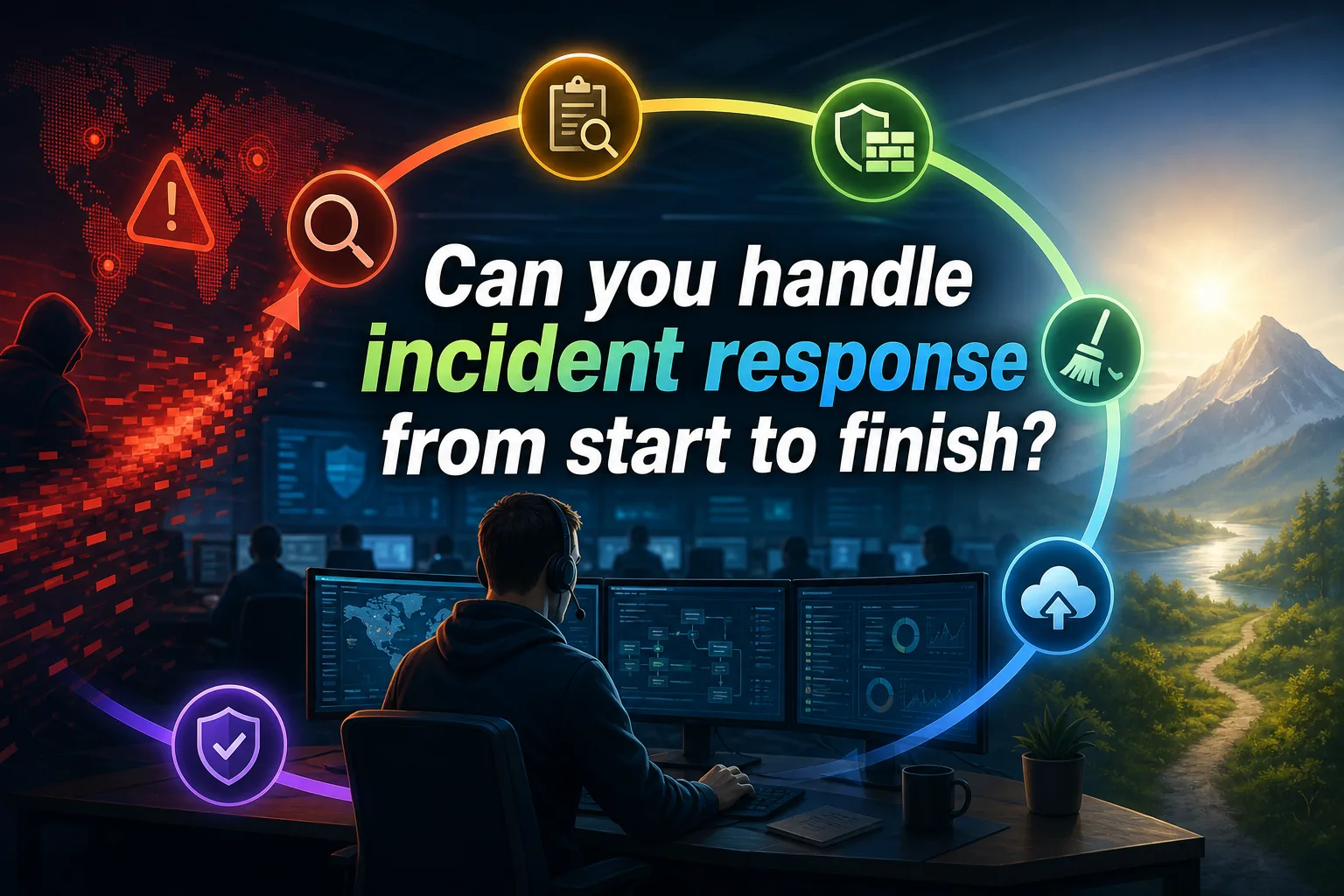
It’s easy to be wowed by claims of “full coverage,” but when a real incident hits, you need to know your provider can manage every phase: detection, investigation, containment, eradication, recovery, and prevention of future issues. Don’t just ask, “Do you provide incident response?” Get a real-world example: “Walk me through an actual incident you managed recently. How did you detect the threat? How fast was your response? What steps did you take to contain and eliminate it, and how did you help the client recover?”
What you want is a sense of ownership, not just process. Did the MSSP take the lead in response, or did they hand everything off to your team? Did they coordinate communications, handle regulatory reporting, and document lessons learned? If their story ends at detection or “we handed it off to the client,” consider it a warning sign.
It’s also worth asking how they use telemetry—what data do they collect from your environment, and how does it influence their actions? A provider who can break down how they use endpoint, network, cloud, and identity data for real threat hunting and fast containment is ready for real-world attacks, not just tabletop drills.
How do you deliver security awareness training to our staff?
Technology alone won’t stop phishing or social engineering—your people are a critical line of defense. Security awareness training isn’t a checkbox, it’s essential. But not all MSSPs do this well. Ask, “What training do you provide for our staff? How often, and in what format—live sessions, online modules, or simulated phishing attacks? How do you track engagement and retention, and do you tailor the materials for different roles, like executives or technical staff?”
If a provider shrugs this off or only offers basic, once-a-year videos, that’s a weak spot. You want a partner who can explain how they update training for new attack trends and keep the content relevant. Maybe they run simulated phishing campaigns or show improvements in click rates over time.
If your company is in a regulated industry, ask whether they provide modules on specific risks—for example, HIPAA for healthcare or PCI for retail. The more your MSSP customizes the program for your business and staff, the stronger your human firewall will be.
Could your tools or advice put our cyber insurance at risk?
Cyber insurance policies set clear requirements, and it’s easier than you’d think for a well-meaning MSSP to recommend something that puts your coverage in jeopardy. This could be missing multi-factor authentication, unsupported encryption, or using tech your insurer doesn’t recognize. Ask directly: “Do any of your products, configurations, or recommended controls conflict with our cyber insurance requirements or make it harder to file a claim if there’s an incident?”
Pay close attention to their answer. An experienced MSSP should have worked with insured clients and know where conflicts might arise. They should be willing to review your policy, talk to your insurance broker if needed, and point out any recommendations that could cause exclusions.
If the provider brushes off your concerns or says, “That’s up to you,” think twice. You want a partner who’s willing to align their services with your risk transfer strategy, not someone who leaves you exposed when you need coverage most.
Are you financially stable, and can you provide references?

Even the most technically skilled MSSP is a risk if they’re not financially sound. If a provider goes out of business mid-contract, you could lose access to logs, incident data, or even basic monitoring right when you need them. Ask, “Can you share recent financial statements or proof of financial stability? Can you provide references from organizations similar to ours, ideally in the same industry or with comparable compliance needs?”
A solid provider won’t shy away from transparency. While you probably won’t see every detail, they should be able to show a record of long-term contracts, client renewals, and steady leadership. References are just as important—don’t just accept a sheet of logos. Ask to speak with current clients about their experience: how responsive is the provider, how clear is their reporting, and how did they handle a real incident or a difficult patch?
This kind of due diligence helps you avoid fly-by-night vendors and find a partner who can grow with you as your risk profile and business needs change.
Nail down responsibilities and costs for a lasting MSSP partnership
Once you’ve worked through these six essential questions to ask managed security service provider candidates, you’ll probably have a short list of contenders. Now it’s time to get practical. Ask for a RACI-style responsibility matrix or a clear, written document spelling out exactly who is responsible, accountable, consulted, and informed for every major cybersecurity task—patching, configuration changes, threat analysis, compliance reports, user training, and breach communications.
This step closes the door on gray areas. Too many incidents drag on because each side thinks the other owns a task. Defining roles up front helps you avoid finger-pointing in a crisis and makes onboarding smoother.
Next, demand clear cost breakdowns. Don’t settle for a lump sum or vague talk about “value.” Ask, “What exactly will you do for us? What’s included, what changes are you recommending, and what’s the total cost of ownership?” A trustworthy MSSP will be upfront about pricing—whether it’s per user, per device, or flat fee—and point out add-ons, project fees, or out-of-scope work.
Finally, use the Australian Cyber Security Centre’s guidance as a checklist. Make sure your MSSP follows best-practice frameworks, manages systems securely, logs and monitors activity with alerts, runs regular vulnerability assessments, and has a documented incident response plan. If a provider can walk you through these points, with real examples, they’re far more likely to give you actual protection—not just a sense of security.
Choosing an MSSP is a big decision, but you don’t have to rely on gut instinct or glossy brochures. When you use these questions to dig for specifics, you’ll see quickly who’s truly prepared to defend your business—and who’s just selling a good story. The strongest partnerships begin with clear expectations and open communication, so you know exactly who will have your back when the next alert hits, even if it’s at 2 a.m.