How to Qualify Channel Partners Before Signing Agreements: Step-by-Step Guide 2026
Learn how to qualify channel partners before signing agreements with proven frameworks, scorecards, and due diligence steps for smooth onboarding and faster results.
Imagine spending weeks building what looks like the perfect partnership, only to realize after the signatures are dry that the reseller can’t actually reach your ideal clients, isn’t well-versed in your tech, or doesn’t have enough bandwidth to make your product a real priority. Onboarding drags out, sales projections slip, and you’re left untangling problems that spill over into your other channel relationships. For too many channel managers, this isn’t just a one-off mistake—it’s a recurring, costly mess. The solution begins before anyone gets a contract: you need a thorough, hands-on qualification process that weeds out wishful thinking and focuses on partners who can deliver.
Growth targets and the thrill of a new logo can make it tempting to skip formal partner vetting. But bringing on new partners without a clear qualification process is a shortcut to frustration. Problems like partners misunderstanding your product, failing to reach your target customers, or dragging their heels on onboarding usually trace back to skipping fit checks up front. Once you’ve signed a deal, it’s tough to backtrack or disengage without creating friction.
Qualification isn’t just about avoiding obvious mismatches. Done right, it’s a two-way evaluation that helps both sides avoid wasted time and money. Treat qualification as its own step in your channel funnel. By only onboarding those who are actually ready and aligned, you keep churn low and avoid channel conflict. Each new agreement then feels less like a gamble and more like a real path to results.
Taking qualification seriously also signals professionalism. Prospective partners who go through a structured process see that you hold high standards, and that attracts others who value a real, lasting partnership—not just a quick logo swap.
Define Your Ideal Partner Profile (IPP): Five Key Factors
Before you contact a single candidate, get sharp about what your ideal partner looks like. Your Ideal Partner Profile (IPP)—sometimes called ICPP—is the blueprint. On one clear page, outline five essentials: customer overlap, capability, business model alignment, coverage, and willingness to invest.
Customer overlap is the first filter. Rather than hoping someone can break into your market, look for partners already serving your ideal customer profile (ICP)—think company size, vertical, or geography. If your SaaS targets mid-sized insurance agencies, for instance, focus on partners with a track record in that exact space.
Capability goes deeper than website claims. Check for technical certifications, past experience delivering similar solutions, and the ability to handle marketing, sales, support, and billing for your product. Look beyond their sales pitch and dig into how they actually operate.
Business model alignment is about making sure your partnership economics fit how the partner earns money. Are they reselling, handling managed services, or just referring leads? If your model doesn’t fit theirs, it won’t scale.
Coverage checks if the partner can reach markets, regions, or segments you can’t serve well. Maybe your team is strong in the US but needs a foothold in APAC—prioritize partners who’ve already built credibility there.
Willingness to invest isn’t just enthusiasm on a call. Look for executive commitment, assigned staff, and signs they’re ready to launch a new product line. Score these traits so you can objectively compare candidates as you go.
The 4C Method: Simple Steps for Screening Partners
To put your IPP into practice, many channel leaders use the 4C method: Customer, Credibility, Capability, Commitment. This checklist makes it easier to dig into what matters during both application reviews and discovery calls.
Customer: First, check if their current clients match your ICP. Ask for their top 10 customer names—do these align with your ideal segment, size, and buyer role? Don’t settle for hypotheticals; look for proof of overlap now.
Credibility: Research how they’re seen in the market, look for case studies that relate to your solution, and check for portfolio alignment. Can they show successful projects similar to what you offer? Are there references or third-party reviews you can talk to?
Capability: Examine their sales process, marketing approach, delivery operation, and technical team. How do they structure deals? Do they have the right certifications? Run a mock demo or Q&A to test their understanding of your product.
Commitment: This is where many deals lose steam. Look for clear executive backing, a specific partnership owner, and evidence your product fits their growth plans. Will they commit to a launch plan, assign staff, and measure results with you? Both sides should agree on what a win looks like.
Use the 4C method as a scorecard. If a partner falls short in any area, pause and address it before moving forward. Rushing leads to bigger problems later.
How to Run a Mutual Qualification Call

If an application passes the basics, set up a qualification call. This is where you separate the truly interested from the casual browsers. Treat the conversation as a two-way street—you're evaluating them as much as they’re sizing you up.
Start with the essentials: “Tell me about your typical customer profile. Which verticals and regions are your core strengths?” Probe sales ability: “What’s your process for identifying new opportunities? Who are the key decision makers on your team?”
Ask directly about resource commitment. “How many sales reps or technical staff would you dedicate to this partnership?” Dig into process: “How do you handle deal registration, reporting, and training in your current channel programs?”
Bring up real scenarios: “Describe a time a partner launch faltered—what did you do to recover?” Straight answers here reveal both preparedness and transparency.
Finish with clear next steps. If both sides feel good, move to due diligence. If there are major concerns, talk them through now rather than after contracts are signed.
Due Diligence and Pre-Agreement Planning

Even if a call goes perfectly, don’t skip background checks. Due diligence is more than a formality—it’s how you confirm reputation, track record, and capability before giving a green light. Run online searches for complaints or legal issues, visit their office if you can, and speak directly with at least two client references about their experience and support.
For bigger or international partners, consider using third-party due diligence services for compliance and financial health checks. As Forrester recommends, go further than just credit reports to really know who you’re bringing into your channel.
Once all checks are done, draft a pre-agreement Memorandum of Understanding (MOU) or a one-page plan. While not legally binding, this practical document captures shared revenue targets, agreed market segments, tactics such as joint webinars or co-branded campaigns, division of responsibilities, resource commitments, and a basic return-on-investment expectation for both parties.[S2, S8]
Getting this down on paper often reveals misalignments you can fix early. If you can’t agree at this stage, it’s a sign you may need to step back and reassess.
Set Partners Up for Success After Qualification
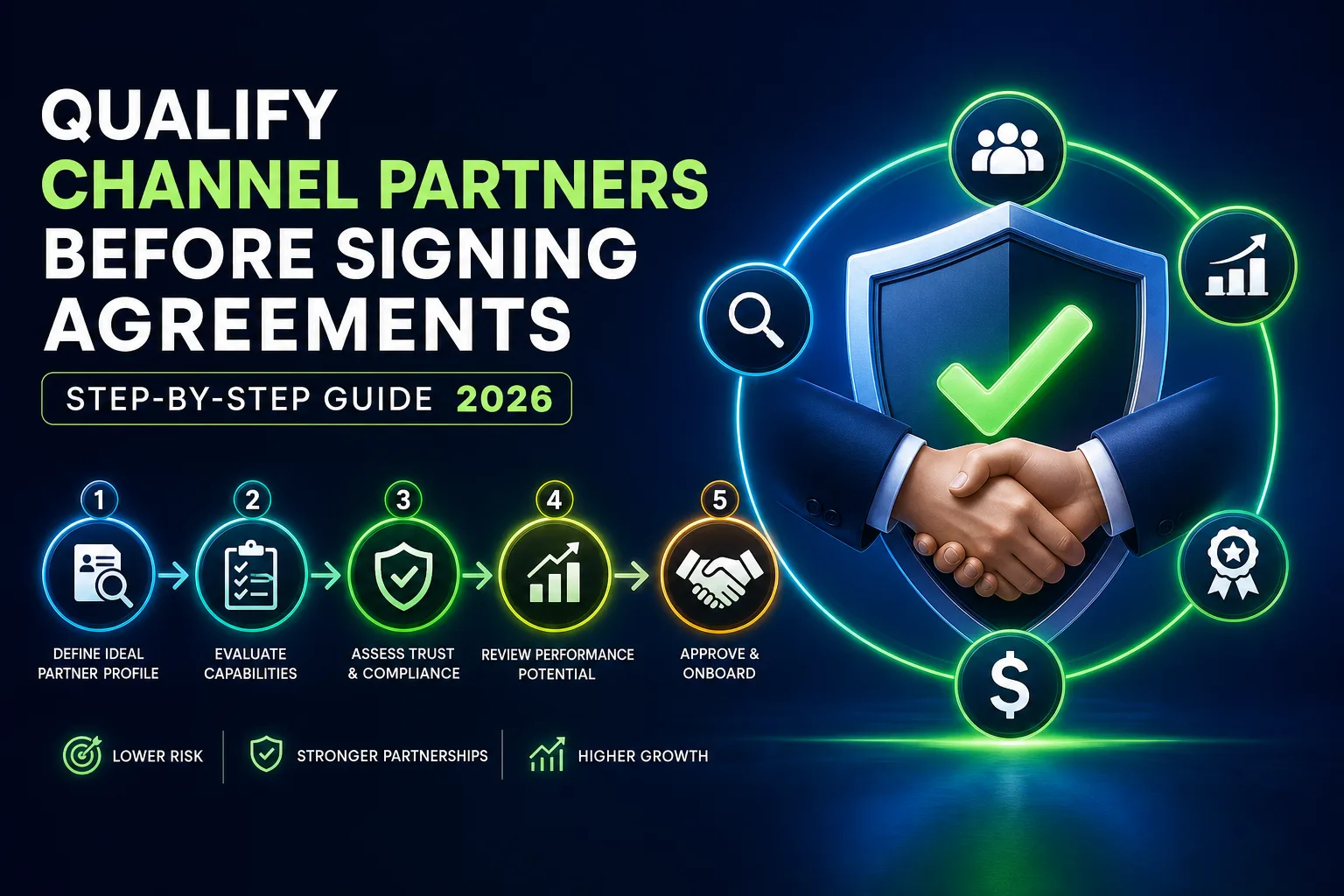
By the time you’re ready to send a contract, you should have checked every box: IPP alignment, 4C scorecard, a productive qualification call, thorough due diligence, and a signed MOU or plan. Now make sure the contract matches what you agreed to and lays out a clear onboarding path.
A strong agreement covers more than just legal points. Spell out territory or segment responsibilities, set minimum pricing to protect your brand, require mandatory training for sales and technical staff, and define brand use rules. Include straightforward termination clauses for missed targets or compliance issues—this protects both parties if things don’t pan out.
Don’t let things idle once the contract is in place. Have your onboarding plan ready: book training sessions, provide demo access, and assign a partner manager for regular check-ins. Watch early results closely to catch and fix issues before they turn into bigger problems.
Quality always beats quantity here. Instead of chasing every possible reseller, use tools like LinkedIn, Apollo, or Kaspr to build a focused list of partners that fit your ICPP, using filters for company type and decision-maker roles. This way, every new partner you sign has a true shot at real growth for both sides.