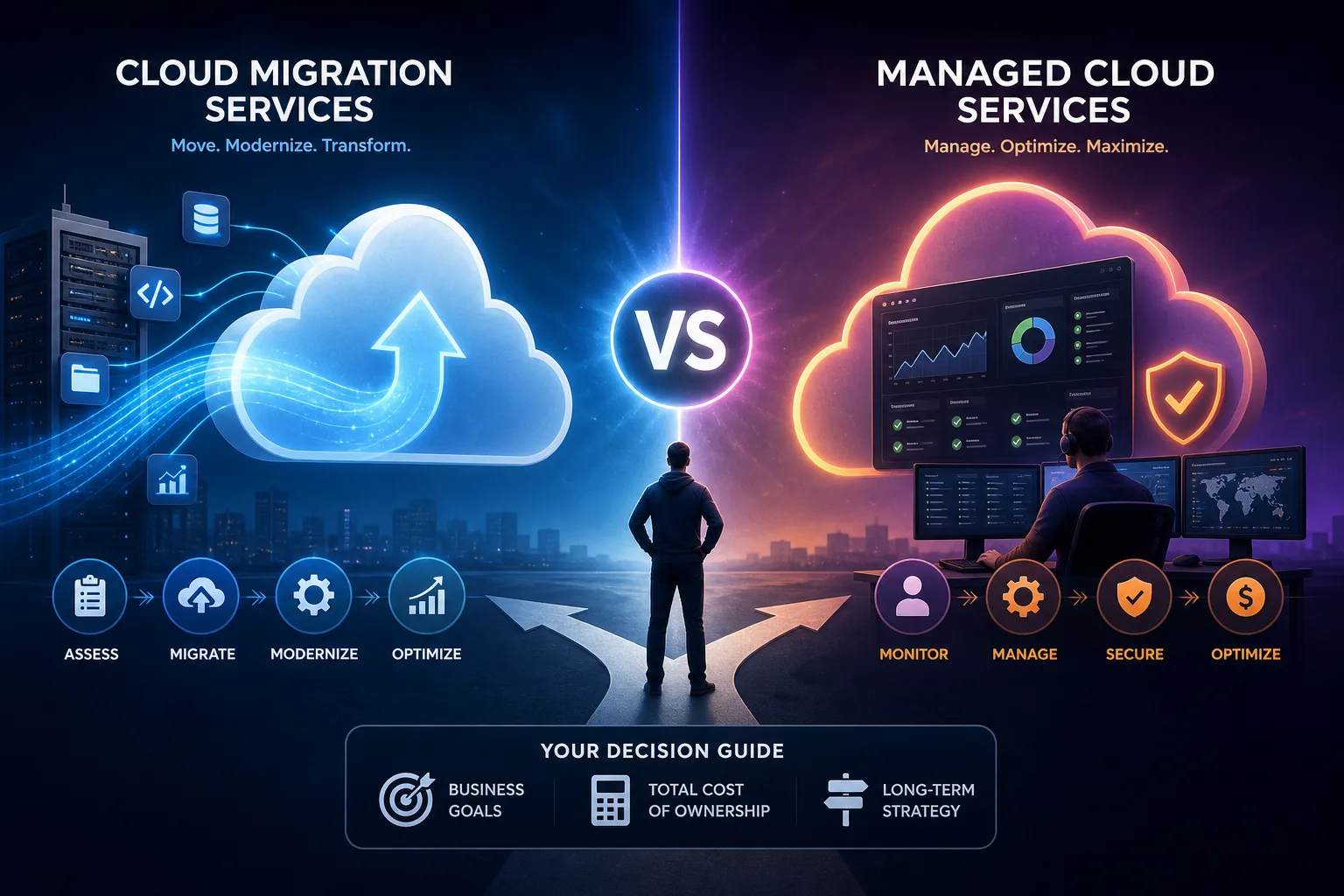
How to create a cloud migration service offer: complete guide and structure for 2026
Learn how to create a cloud migration service offer—structure, TCO, 6R model, pricing, compliance, and post-migration steps to win real cloud migration deals.
The moment you’re tasked with putting together a cloud migration offer for a real client, the clock starts ticking. Behind every request for proposal is a skeptical IT director who’s seen cookie-cutter pitches and vague promises before. What separates an offer that gets a call-back from one that’s quietly left on read? It’s not just technical know-how or a flashy deck—it’s showing, in concrete steps, how your migration service solves their business pain, matches their compliance checklist, and won’t leave them with budget surprises or operational headaches months after go-live.
Every successful migration proposal I’ve seen—and every failed one I’ve had to rewrite—has been anchored to a formal migration lifecycle. This isn’t just a paper exercise. Microsoft defines six practical stages: Define strategy, Plan, Ready, Migrate, Govern, and Manage. Each has a direct impact on risk, clarity, and client trust.
Start by laying out your services according to these stages. In the Define strategy phase, spell out how you’ll run workshops to uncover the client’s business case and migration goals. The Plan phase should detail your approach for mapping dependencies, assessing technical constraints, and sketching a realistic timeline. Ready is where you prep the cloud environment and validate prerequisites.
Migrate is the action phase—describe your phased execution, data transfer, testing, and cutover steps. Don’t gloss over Govern; here, you’ll present frameworks for cost control, security, and compliance. Finally, Manage covers your plan for ongoing support, optimization, and performance monitoring. Organizing your offer this way does more than tick boxes—it shows clients you understand how to get them from business case to steady-state operations, without missing any handoffs.
Build migration strategy with the 6R model for each workload
One of the most common reasons migration proposals fall flat is a one-size-fits-all approach to applications. Instead, use the 6R model—rehost, replatform, repurchase, refactor, retire, retain—to justify your migration strategy for each workload. This isn’t just jargon. It’s the difference between a client feeling you “get” their environment and thinking you’re winging it.
For every major app or system, clearly state which of the 6Rs you’re recommending and why. For example, you might propose rehosting a legacy ERP system to minimize disruption and risk, while recommending refactoring a custom web app to take advantage of cloud-native scalability. Link each decision to business value, risk, and technical constraints: “We’re suggesting replatforming your CRM to reduce licensing costs while maintaining required integration points.”
Clients want to see that you’ve weighed costs, effort, and long-term impact—not just followed a template. They also want the rationale in plain English, not acronyms. When you break down your approach like this, you give decision-makers the confidence that your plan is tailored to their real-world priorities.
Define a phased scope of work for your migration service
A well-structured scope of work is your safety net against scope creep and misunderstandings. The most effective cloud migration service structure divides delivery into phases: discovery/assessment, planning/design, migration/validation, and handover/optimization.
In discovery, outline activities like stakeholder interviews, infrastructure inventory, and application dependency mapping. During planning and design, specify deliverables such as a detailed migration roadmap, risk assessment, and cloud architecture diagrams. For the migration and validation phase, describe pilot migrations, data transfers, system testing, and user acceptance protocols.
The handover phase isn’t just a formality. It should include knowledge transfer sessions, runbook delivery, and an early support period to address post-migration issues. By spelling out each phase and its concrete outputs, you avoid surprises for both your team and your client. More importantly, you establish a rhythm and cadence that helps projects stay on track, even when unexpected issues surface.
Structure pricing and TCO: one-time costs vs. monthly cloud spend
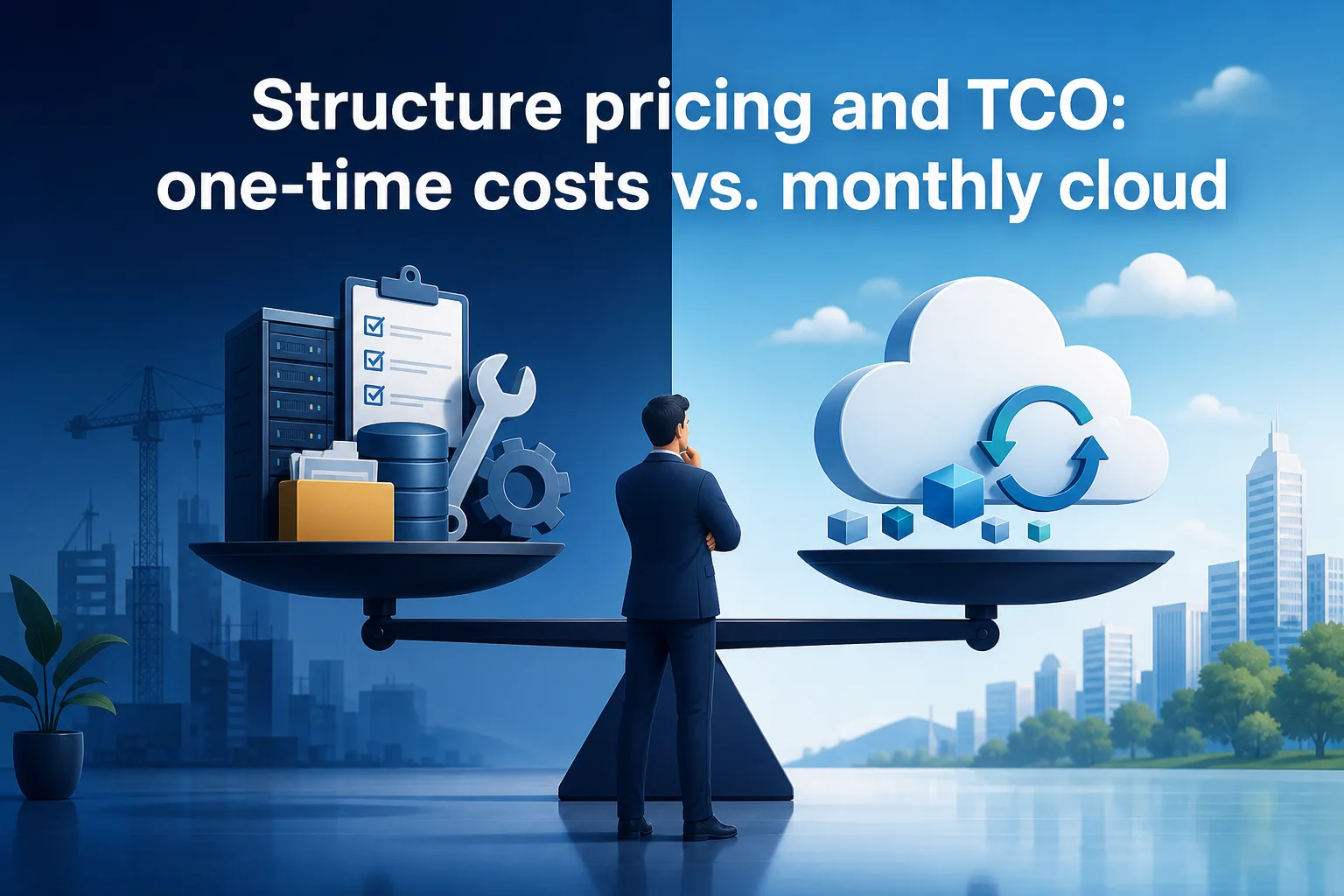
Nothing derails a promising deal faster than fuzzy pricing or TCO confusion. To build trust, you need to break out one-time migration costs (like assessment, tooling, data transfer, and refactoring) separately from projected monthly cloud spend. This is not just a nice-to-have—it’s what clients and finance stakeholders expect.
Lay out your migration fees clearly: list hourly or daily rates, estimated hours, and totals for each phase. Then, present a forecast of ongoing cloud costs, using TCO calculators to compare current infrastructure spending with projected cloud operating expenses. Point out where savings are likely, and flag any new recurring costs, so there are no surprises.
Clients appreciate when you go a step further: include scenarios that show the impact of scaling up resources or adding services post-migration. If your offer includes optional add-ons like managed monitoring or advanced security, price them transparently. This approach helps clients see the ROI story and gives your offer a professional edge over competitors who only provide a single lump-sum number.
Assemble the right team and set success benchmarks
A cloud migration is only as strong as the people behind it. Proposals that win deals don’t just list roles—they introduce the migration architect or core team that will own delivery. Assign named responsibilities for each phase: who leads discovery, who manages data transfer, who signs off on go-live.
Alongside team structure, set clear KPIs and performance baselines before any migration work starts. This might include goals for system uptime during transition, benchmarks for migration speed, or targets for post-migration performance. By stating these in your proposal, you turn vague promises into measurable commitments.
Clients gain confidence when they see you’re not just throwing resources at a problem but organizing a team with the right expertise and accountability. Referencing relevant certifications or previous migration experience in similar environments can tip the scales in your favor, especially when clients need to justify their vendor pick to internal stakeholders.
Address compliance, evidence, and client requirements in your offer
Compliance isn’t just a checkbox—it’s the difference between getting shortlisted and being dismissed out of hand. The best migration offers start by mapping every buyer requirement and evaluation criterion to a specific proposal section or attachment. A compliance matrix, even a simple one, shows where you address each item.
Upload or reference concrete evidence: past migration case studies, staff certifications, methodology documentation, and security policies. If a client requests proof of a specific capability—say, ISO 27001 certification or experience migrating regulated workloads—attach the document or call out the reference in your proposal.
Before submitting, review your offer against the client’s checklist or solicitation. Did you answer every mandatory field? Are all forms and signatures present? BidPacto’s proposal workflow is a good example: it calls for mapping each requirement, attaching proof, and verifying completeness before sending. This extra step can be the difference between a smooth procurement and a round of awkward follow-up emails.
Governance and continuous optimization after migration

Many offers stop at the cutover, but savvy clients know that’s just the start. Make your proposal stand out by including a post-migration governance and optimization layer. This should cover how you’ll help the client establish cloud governance models, implement cost control policies, and set security baselines.
Offer ongoing monitoring and optimization as a managed service, not just an afterthought. Describe how you’ll benchmark performance, monitor resource usage, and recommend improvements as cloud needs evolve. For instance, you might provide monthly health checks, cost optimization reports, or quarterly security reviews.
By positioning post-migration management as integral to your service, you show clients you’re invested in their long-term success—not just a one-time project. This also opens the door to future managed services and strengthens your relationship beyond the initial migration.
Bringing your offer together for real-world results
Combining all these elements into a winning offer means more than filling in a template. It’s about connecting the dots: demonstrating a clear roadmap, justifying each migration decision with business logic, backing up your claims with evidence, and pricing everything so clients know exactly what’s included.
Watch out for common pitfalls: skipping compliance attachments, missing a phase in your scope, or proposing a migration strategy that doesn’t fit the client’s real constraints. Each misstep can stall the deal or erode trust. Instead, treat your proposal as a working document—one that evolves with the client’s feedback and gets sharper with each submission.
When you build your cloud migration service offer with this level of detail and transparency, you don’t just tick boxes—you make it easy for the client to say yes, knowing you’ve anticipated the risks, mapped the journey, and committed to results they can measure.