How to Choose Between Cloud and Hybrid ERP: A Practical Guide for 2026
Confidently choose between cloud and hybrid ERP with a five-point framework. Compare setup, cost, control, and scaling for real-world business needs in 2026.
You’re in a meeting that’s gone twenty minutes over. The CFO wants predictable costs. Operations needs things live yesterday. IT’s worried about control.
Your inbox is filled with pitches for cloud ERP, but your legacy systems aren’t going anywhere soon. The board is asking for a recommendation, and every vendor says their solution is “future-proof.” This is the reality for many leaders weighing the move to a new ERP—caught between the speed and simplicity of the cloud and the flexibility of a hybrid approach. The wrong call can mean months of delays or budgets thrown off track. So how do real companies actually choose between these options when the stakes are high and needs are never simple?
When Cloud ERP Makes Sense
Cloud ERP tends to shine when you need results fast. If your business is scaling up, launching new locations, or merging departments, rapid deployment can be the difference between hitting targets and missing the boat. Cloud-based systems are built for quick setup—many organizations have gone from contract to go-live in a fraction of the time compared to traditional implementations.
Lower upfront cost is another draw. Since cloud ERP is typically subscription-based and vendor-hosted, you avoid heavy investments in hardware or dedicated data center space. CFOs often appreciate the predictability of monthly or yearly fees, which makes budgeting less of a guessing game.
Automatic updates take a burden off your IT staff. Vendors handle maintenance, security patches, and new features in the background. This means your team spends less time firefighting and more time focusing on what moves the needle for your business.
Remote access is baked in. Teams can log in from anywhere with an internet connection—handy for organizations with distributed offices or growing remote workforces. This level of flexibility has become an expectation, not a luxury.
Where Hybrid ERP Wins
Hybrid ERP comes into its own when your business needs to keep a foot in both worlds. If you have sensitive data or processes that can’t move to the cloud—due to industry regulations, integration with legacy equipment, or internal policy—a hybrid model lets you keep those operations on-premises while still benefiting from cloud features elsewhere.
Complex organizations, such as manufacturers with custom shop-floor integrations or global firms juggling regional compliance, often find hybrid ERP a better fit. The ability to mix cloud modules (for areas like finance or HR) with on-premises systems (for production or warehousing) gives you the flexibility to tailor the solution to your actual workflow.
Control is another big factor. Some companies want more say over how data is stored, updated, or integrated. Hybrid ERP spreads responsibility between your IT team and the vendor. This can mean more setup work and planning up front, but for businesses with strict requirements, it’s often worth the effort.
Integration complexity is a reality with hybrid ERP. Connecting cloud and on-premises components isn’t always plug-and-play. But for organizations with unique needs, this flexibility is what unlocks true value from their ERP investment.
Five Checks for Your Decision

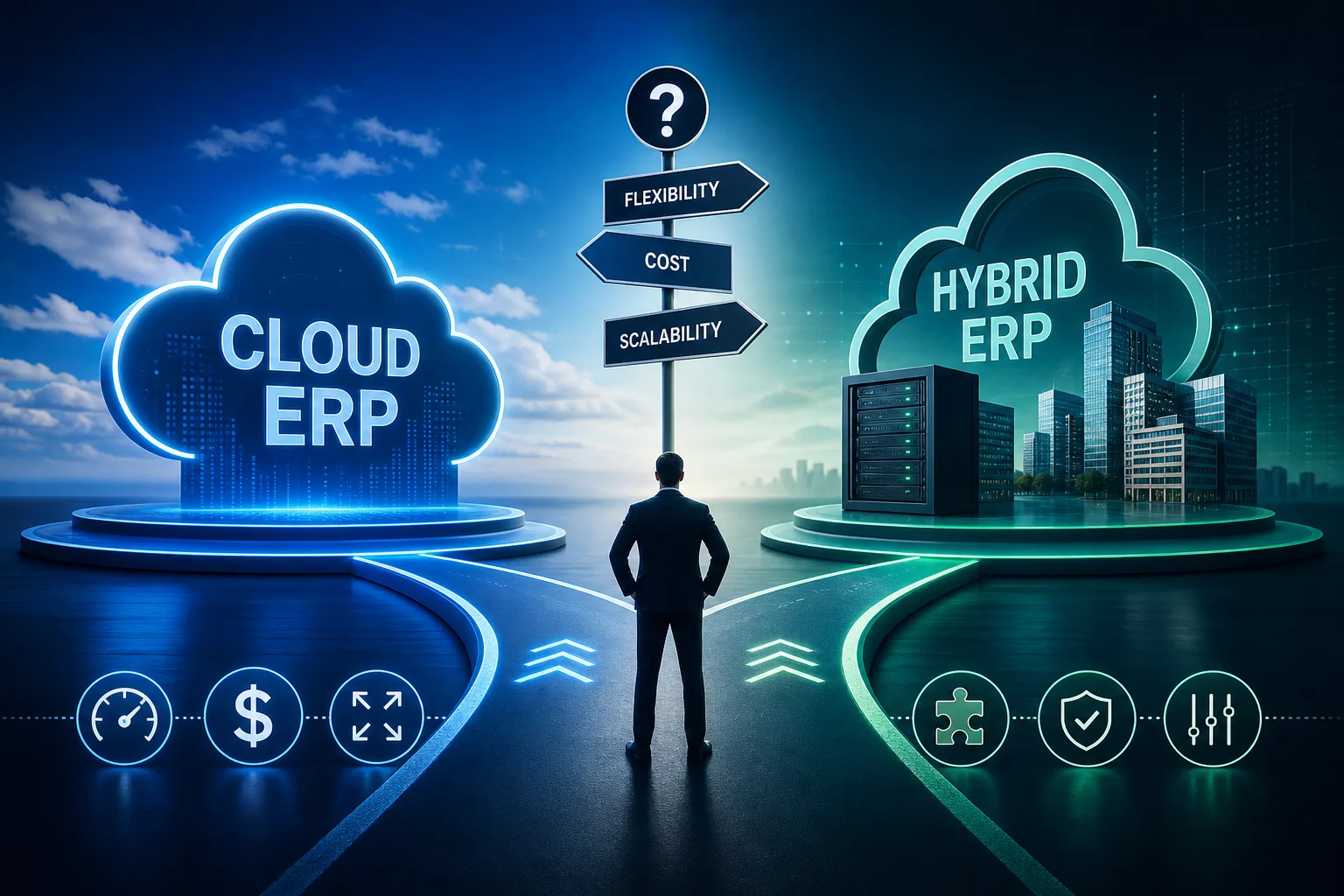
Making the right call isn’t about following a trend—it’s about matching technology to your real-world needs. Use this five-point checklist as a framework for your decision:
Deployment speed: How quickly do you need the new system live? Cloud ERP is typically faster to set up, while hybrid ERP projects often take longer due to added complexity.
Upfront budget: Are you trying to minimize capital expense? Cloud ERP spreads costs over time with predictable subscription fees. Hybrid ERP usually requires more upfront investment in both software and integration.
Need for control: Do you have strict requirements for data residency, compliance, or custom integrations? If so, hybrid ERP may give you the control you need—at the price of higher IT effort.
Integration complexity: Are you connecting to legacy systems or specialized equipment? Hybrid ERP allows for custom integration but expect more hands-on work from your technical team.
Scalability requirements: Is your business adding locations, users, or business units rapidly? Cloud ERP is generally more scalable, letting you expand seamlessly as you grow.
Run each option through these five checks. If you see clear answers favoring one side, your choice gets a lot simpler. If you’re split, weigh which factors matter most for your business over the next three to five years—deployment cost may matter now, but control or integration could be the bigger headache later.
What Really Changes With Each Model?
The day-to-day experience of running cloud ERP versus hybrid ERP looks different for IT and business users alike. With cloud ERP, the vendor manages hosting, updates, and maintenance. Your IT team focuses more on optimization and less on basic upkeep. Updates roll out automatically, so you’re always on the latest version—no lengthy upgrade projects needed.
Costs are more predictable with cloud ERP, thanks to the subscription model. There’s usually a lower initial investment, and you avoid the surprise expenses that come with maintaining physical infrastructure.
Hybrid ERP splits responsibility. Some modules live in the cloud, while others remain on-premises. Your IT team coordinates updates for the on-premises parts, while the vendor handles the cloud side. This mixed environment demands more planning and tighter coordination, especially during updates or integrations.
From a user perspective, cloud ERP often means consistent access and interface, no matter where the team is located. Hybrid ERP can introduce small differences depending on whether a module is cloud-based or not, which may impact training and support.
Comparing Setup, Cost, and Scaling in Practice
Let’s break it down with a real-world lens. Cloud ERP is known for its quick setup—some companies can go live within weeks rather than months. This speed can be a lifeline if your existing system is holding back growth, or if you need to onboard a new acquisition without delay.
Initial costs are lower for cloud ERP. You avoid buying servers or dedicated network equipment, and your IT staff won’t need to spend months configuring physical hardware. The subscription fee model also means you can forecast costs with more confidence.
Hybrid ERP, by contrast, typically demands a longer runway. The initial phase involves connecting cloud modules to your existing on-premises systems, which can be tricky if those systems are highly customized or out-of-date. The upfront cost is usually higher, both in terms of software and the integration effort required.
When it comes to scaling, cloud ERP is generally seen as highly scalable, letting you expand as your business grows, but the specific process for adding large numbers of users or modules may depend on the provider and your subscription plan [S1, S3]. Hybrid ERP’s scalability, however, depends on the resources available in your on-premises environment and the way integration is designed [S1, S2]. If your existing infrastructure reaches its capacity, you may need to consider infrastructure upgrades or adjustments to your deployment strategy to support further growth.
Integration challenges shouldn’t be underestimated with hybrid ERP. For example, a manufacturer might want to keep its plant-floor control system on-premises, but connect it with a cloud-based finance module. Making these systems “talk” to each other reliably can take extra time and specialized skills.
Real-World Scenarios: How Companies Decide

Consider a global retailer rolling out new stores in multiple countries. Fast deployment and easy scaling across locations make cloud ERP the clear winner. The IT team doesn’t need to manage infrastructure in every region, and finance enjoys seeing real-time data from anywhere.
On the other hand, take a large automotive parts supplier with strict compliance rules and legacy machinery on its shop floor. Here, hybrid ERP is the better fit. The company can keep its sensitive manufacturing data on-premises, while leveraging cloud modules for HR and accounting. Integration takes longer, but the business keeps the control it needs.
Another example: a mid-sized distributor wants to retire its aging server room but still needs a direct link to its warehouse management system. Hybrid ERP lets them keep the warehouse system local while moving sales and purchasing to the cloud—balancing operational needs with cost savings.
One thing these examples share: no model is “one size fits all.” The right answer depends on what makes your business tick, not just what’s newest or most hyped.
Your Next Step: Making an Informed ERP Choice
If you’re ready to move forward, don’t just ask vendors to demo their shiniest features. Start with your five-point framework: deployment speed, upfront budget, need for control, integration complexity, and scalability. Rank these by importance for your business.
Bring IT, finance, and business leads together for a practical discussion. Ask tough questions about integration, ongoing support, and what changes day-to-day with each model. Press vendors for clear answers—if they can’t explain how their solution handles your specific priorities, that’s a red flag.
Map out a simple scenario for your organization: What happens in year one? How much control do you need over data and updates? Who will handle integration? What budget flexibility do you have in year two if the business grows or pivots?
By grounding your decision in real needs and using a structured checklist, you’ll avoid the most common missteps. Instead of a leap of faith, your ERP project becomes a strategic move—one that sets you up for growth without the headaches of rushed or mismatched deployment. When you present your decision, you’ll be able to explain not just what you chose, but exactly why it fits your company’s goals.